Four Steps to Identify High-Quality Scented Candles: Say Goodbye to "Pretty but Useless" Products and Choose the Right Soothing Essentials
The therapeutic power of an aromatic candle lies hidden within its wax base, fragrance, and combustion characteristics. Many people focus solely on aesthetics and scent, only to end up purchasing inferior products that offer poor scent throw, emit black smoke, or irritate the respiratory tract. By mastering the following four key methods for evaluation, you can effortlessly select high-quality aromatic candles that are both safe and effective.
I.Selecting the Wax Base: Natural plant-based waxes are the preferred choice; safe combustion is the key.
The wax base serves as the soul of an aromatic candle, directly determining both its burning safety and longevity. High-quality candles prioritize the use of natural ingredients, whereas inferior varieties often rely on low-cost petroleum-derived extracts.
- Premium Materials:Plant-based waxes—such as soy wax, coconut wax, and beeswax—are the mainstream choice; they burn at a low temperature, produce no black smoke, and are eco-friendly and biodegradable, making them safe for use even by those with sensitive skin or in households with infants and children.Beeswax is natural and wholesome, possessing a subtle, inherent honey scent; it burns steadily, though its price tends to be on the higher side.Certain high-quality blended waxes (plant wax combined with a small amount of beeswax) strike a balance between hardness and burn performance, making them an excellent choice as well.
- Materials to Avoid:Pure paraffin wax (a petroleum derivative) is inexpensive; however, it readily releases harmful substances and soot when burned. Prolonged use may trigger dizziness and respiratory discomfort—conditions that individuals with asthma, in particular, should strictly avoid.
- Screening Techniques:When checking product labels, those explicitly stating "soy wax," "coconut wax," or "plant-based wax" are generally more reliable. You can also gently touch an unlit candle: plant-based waxes have a smooth, supple texture that is not sticky, whereas paraffin wax tends to be harder and may feel slightly greasy.
II.Assess the Scent: Essential Oils Are the Soul—Reject Harsh Chemical Odors.
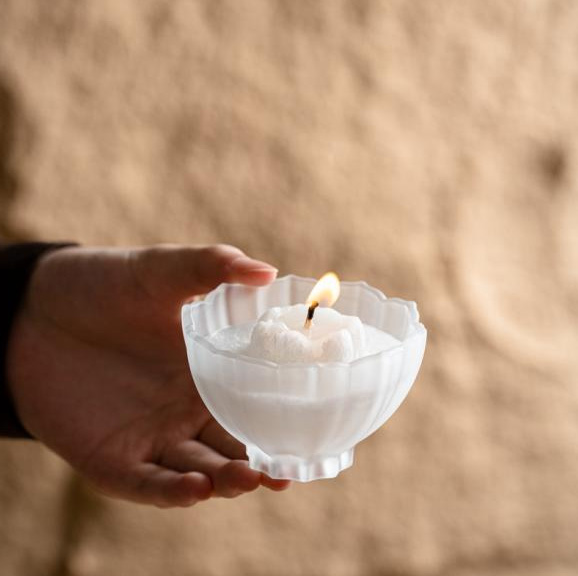
The texture of the fragrance lies at the very heart of a high-quality scented candle; the sensory experience offered by natural essential oils is worlds apart from that of synthetic fragrances.
- Source of Premium Aroma:Natural plant essential oils or compliant blended fragrances. Natural essential oils are extracted from flowers, herbs, and trees, featuring distinct top, middle, and base notes—for instance, a woody blend might transition from crisp cedar to warm sandalwood. Their aroma remains pleasant even after prolonged exposure and offers soothing benefits for both mind and body. Compliant blended fragrances utilize natural essential oils as a base, incorporating a small amount of synthetic ingredients to enhance longevity; products that meet relevant regulatory standards and hold the necessary certifications can be used with complete confidence.
- Characteristics of Inferior Aroma:Composed entirely of synthetic fragrances, it possesses an initially pungent and overpowering scent that lacks complexity or depth; prolonged exposure can easily induce dizziness and nausea, and burning it may release allergenic substances.
- Screening Techniques:When evaluating the scent prior to lighting, a high-quality product will emit a fragrance that is soft and not overpowering. Thirty minutes after lighting, the aroma should diffuse naturally throughout the space rather than remaining confined solely to the immediate vicinity of the candle vessel. Additionally, examine the ingredients list: products explicitly labeled with specific "botanical essential oils" (such as lavender or bergamot) are generally of higher quality, whereas those merely listing generic terms like "fragrance" without specifying the exact raw materials should be approached with caution.
III.Examine the Details: The Wick and Appearance Hold Hidden Clues—Quality Lies in the Details.
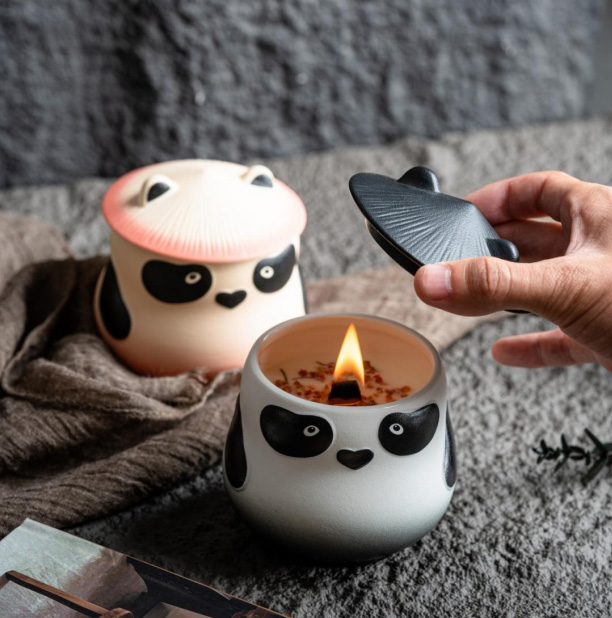
Details serve as the "touchstone" of a high-quality scented candle; from the wick to the exterior appearance, they reflect the caliber of the craftsmanship.
- Wick Selection:Prioritize lead-free cotton wicks or eco-friendly wooden wicks; cotton wicks offer a steady burn, while wooden wicks emit a gentle "crackling" sound that creates a truly atmospheric ambiance. Strictly avoid metal wicks (an outdated technology that may contain lead and has since been phased out). High-quality wicks are uniform in thickness and perfectly centered; if you gently part the surrounding wax, you will reveal a braided structure of multiple cotton strands, ensuring a more complete and efficient burn.
- Visual Inspection:High-quality candles feature a smooth surface free of bubbles or cracks, with a natural and uniform color; avoid selecting styles with overly vivid hues, as these may contain excessive artificial dyes and pose safety risks. When illuminated with a flashlight, candle bodies exhibiting uniform transparency indicate superior quality. Models equipped with a sealing lid are a plus, as they not only help preserve the fragrance but also allow for the candle to be extinguished simply by covering it.
IV.Combustion Testing: 3 Indicators to Determine Compliance
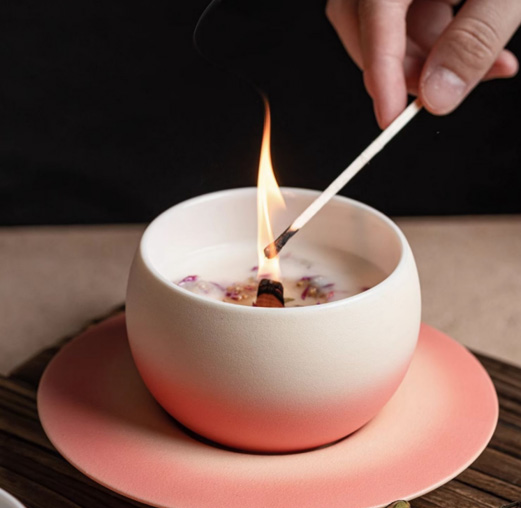
The combustion state serves as the ultimate verification standard; where conditions permit, simple testing may be conducted, or the product specifications may be consulted.
- Combustion Stability:Once lit, the flame height should remain within 5 cm, burning steadily without flickering or producing noticeable black smoke. The wax pool surrounding the wick should melt evenly to prevent "tunneling"—a phenomenon where only the center burns down (which can be effectively avoided through the use of a high-quality wax base combined with an appropriately sized wick).
- Diffusion Capability:After burning for one hour, a gentle fragrance should be perceptible from a distance of three meters, with the scent distributed evenly throughout the entire room—neither locally overpowering nor too faint.
- Security Details:It emits no pungent odor while burning, and the candle vessel remains at a moderate temperature—never too hot to the touch—thereby meeting safety standards.
[Bonus Tip to Avoid Pitfalls]:
1. Look for the Certification Mark:Products that meet the certification standards of various countries—or are labeled as featuring "lead-free wicks" or a "pure plant/food-grade wax base"—offer a greater assurance of compliance.
2. Beware of Low-Price Traps:Natural plant essential oils and high-quality wax bases come at a significant cost; products that are excessively cheap yet claim to offer "long-lasting diffusion" and "natural essential oils" are, in all likelihood, merely a combination of synthetic fragrances and paraffin wax.
3. Reference User Feedback:Pay attention to authentic reviews regarding factors such as "does it emit black smoke when burning," "is the scent long-lasting," and "is it irritating," to avoid products that are frequently cited as disappointments.
A high-quality scented candle represents a harmonious blend of safety, fragrance, and the burning experience itself. By adhering to the principles of "selecting natural wax bases, discerning the quality of essential oils, scrutinizing craftsmanship details, and assessing burning performance," you can steer clear of inferior products that are merely "pretty to look at but useless in practice," transforming every time you light a candle into a beautiful, soul-soothing moment.
Text/Photos: BILA
Copyright and Right of Interpretation held by Bila Biotechnology (Guangzhou) Co., Ltd.